
The Maypark Journal
White Spots on Teeth: Causes, Fluorosis and How ICON Treatment Can Help
White spots are areas of enamel that appear whiter or more opaque than the surrounding tooth.
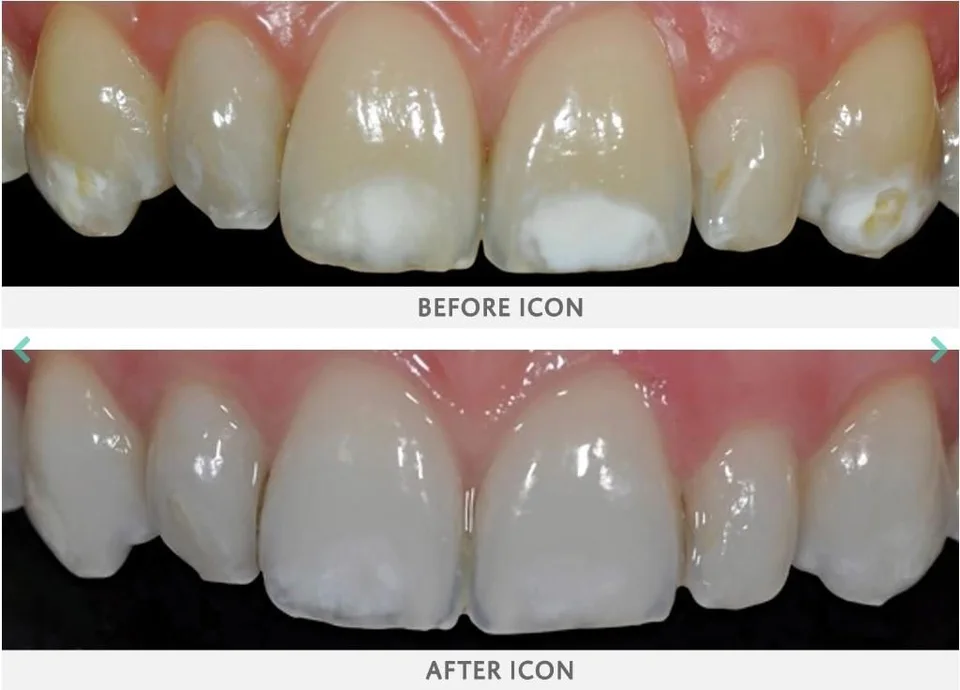
White spots on your teeth can be caused by several different conditions, including dental fluorosis, early enamel demineralisation, previous orthodontic treatment and other enamel defects. At Maypark Dental in Dublin, we assess the cause of the white spots before recommending treatment. For suitable cases, ICON resin infiltration can provide a minimally invasive way of reducing the appearance of white spots without traditional drilling or veneers.
White spots on teeth before and after ICON resin infiltration
What is the best treatment for white spots on teeth? The appropriate treatment depends on the cause of the white spots. Dental fluorosis, postorthodontic white spot lesions and enamel demineralisation require different assessment. For suitable non-cavitated lesions and some mild-to-moderate fluorosis cases, ICON resin infiltration is a minimally invasive treatment that can reduce the visibility of white spots by infiltrating porous enamel and changing its optical appearance.
What are the white spots on my teeth?
They can vary considerably in appearance. Some may look like small, clearly defined white marks, while others can appear as larger cloudy or chalky areas across several teeth.
Importantly, not every white spot has the same cause, so the correct diagnosis is important before treatment.
Common causes include: • Dental fluorosis • White spot lesions caused by enamel demineralisation • White spots following orthodontic treatment • Enamel hypomineralisation or developmental enamel defects • Previous trauma affecting developing teeth • Certain enamel-development conditions A dentist can examine the teeth and determine whether the appearance is consistent with fluorosis, demineralisation or another type of enamel defect.
What causes white spots on teeth?
1. Dental fluorosis Dental fluorosis is one possible cause of white marks or patches on teeth.
Fluorosis develops while teeth are forming when there is excessive fluoride exposure during enamel development. Mild fluorosis can appear as faint white lines, streaks or diffuse white areas. More pronounced fluorosis can involve brown staining or pitting of the enamel.
The appearance can sometimes be confused with other types of enamel defects, which is why an assessment is important.
Can fluorosis be treated?
In suitable cases, yes. Treatment depends on the severity and appearance of the fluorosis. Options can include:
• Tooth whitening • Enamel microabrasion • Resin infiltration • Composite bonding • Veneers in more extensive cases For mild to moderate fluorosis, resin infiltration can be a minimally invasive option for improving the appearance of the affected enamel.
2. White spots after braces White spots are also commonly noticed following orthodontic treatment.
When plaque and bacteria remain around orthodontic brackets, acids can cause mineral loss from the enamel. This can result in white spot lesions, particularly around the areas where brackets were previously attached.
These lesions are different from fluorosis because they are generally associated with enamel demineralisation rather than excessive fluoride exposure during tooth development.
Resin infiltration has been studied extensively for post-orthodontic white spot lesions and can improve their visual appearance. A systematic review and meta-analysis found that resin infiltration produced greater optical improvement than untreated lesions or fluoride varnish in the studies included.
3. Enamel demineralisation and early decay
Some white spots represent an early stage of tooth decay, where minerals have been lost from the enamel but there is not yet a cavity.
These lesions can appear chalky or opaque because changes within the enamel alter the way light is reflected.
This is particularly important because an aesthetic concern may also represent an underlying dental problem.
Your dentist will therefore assess factors such as: • Oral hygiene • Diet and sugar frequency • Plaque accumulation • Previous orthodontic treatment • The location and appearance of the lesion • Whether the enamel surface is intact • Your overall risk of tooth decay Treatment should address the underlying cause as well as the appearance of the tooth.
What is ICON treatment for white spots on teeth?
ICON resin infiltration is a minimally invasive dental treatment used to reduce the appearance of suitable white spot lesions and certain enamel defects.
Rather than covering the white spot with a veneer or removing a significant amount of tooth structure, a very low-viscosity resin is used to penetrate the porous areas within the affected enamel.
The resin has optical properties closer to natural enamel. By infiltrating the microscopic spaces within the lesion, it can reduce the difference in light scattering between the white area and surrounding enamel, making the white spot less visible.
This is why ICON can produce a camouflage effect rather than simply covering the tooth.
How does ICON resin infiltration work?
The treatment involves several stages.
Step 1: Assessment
We first examine your teeth to establish the likely cause of the white spots and determine whether ICON is appropriate.
This is particularly important because ICON is not suitable for every type of white mark or every severity of enamel defect.
Step 2: Preparation of the enamel
The affected area is carefully prepared to allow the resin to penetrate the enamel.
Step 3: Drying and assessment
The tooth is dried using the ICON protocol. This can provide an indication of how much the appearance may improve with infiltration.
Step 4: Resin infiltration
The ICON infiltrating resin is applied to the affected enamel and allowed to penetrate the porous areas.
Step 5: Light curing and polishing
The resin is light cured and the tooth is finished and polished.
The exact protocol can vary depending on the appearance and depth of the lesion.
Does ICON involve drilling the teeth?
NO. ICON resin infiltration is designed to be a minimally invasive treatment and does not require conventional drilling or preparation of the tooth for a veneer.
This makes it particularly attractive to patients who are concerned about preserving their natural tooth structure.
However, it is important to understand that treatment suitability depends on the individual case. Some deeper, more extensive or structurally defective areas may require a different treatment approach.
Can ICON treat dental fluorosis?
ICON resin infiltration can be used to improve the appearance of selected mild to moderate cases of dental fluorosis.
This is an area that has been specifically discussed in the dental literature.
In 2022, Dr Fahad Khan authored a peer-reviewed article in the Journal of the Irish Dental Association entitled “Management of fluorosis using resin infiltration.” The case report described the aesthetic management of moderate fluorosis using tooth whitening followed by ICON resin infiltration.
The article explains how resin infiltration can reduce the visual contrast between fluorotic enamel and surrounding healthy enamel while avoiding the more invasive tooth preparation associated with conventional restorations.
Before and after: treating white spots on teeth
The photographs below show examples of the type of aesthetic improvement that can be achieved following treatment.
Before: White areas and enamel opacities are clearly visible across the front teeth.
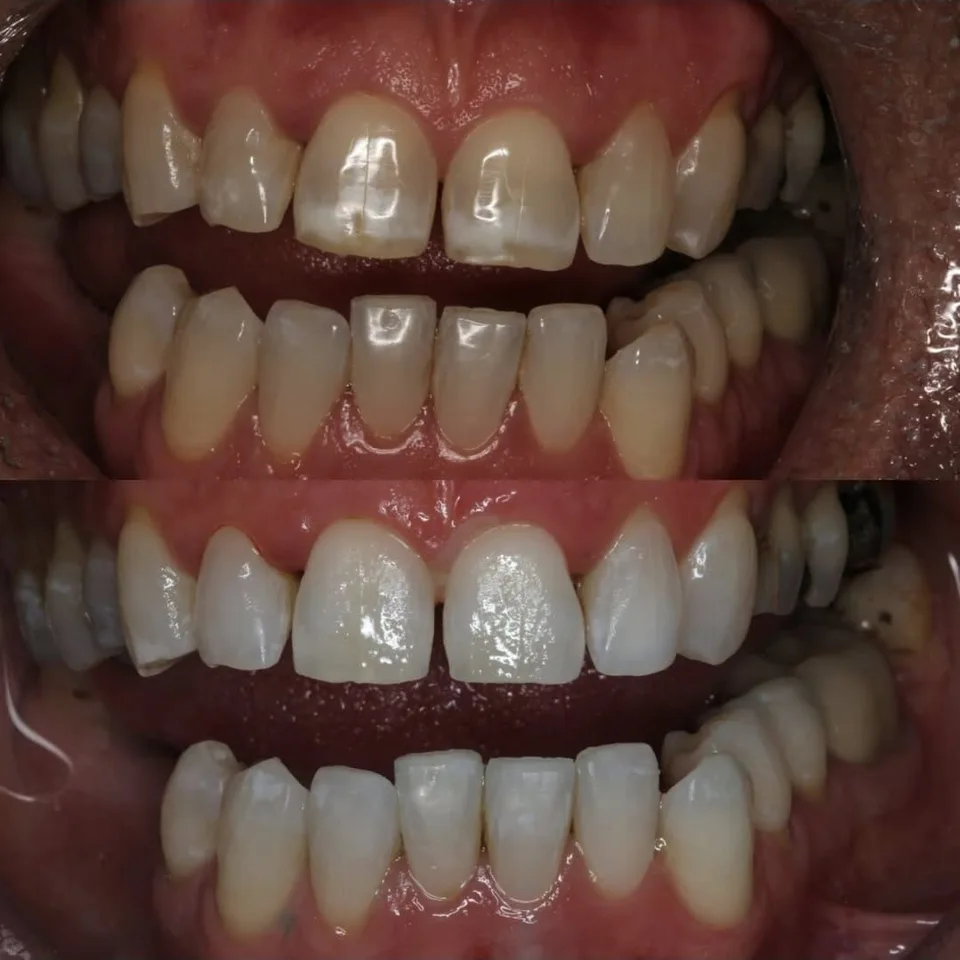
After: The appearance of the white areas has been significantly reduced, creating a more uniform appearance across the teeth.
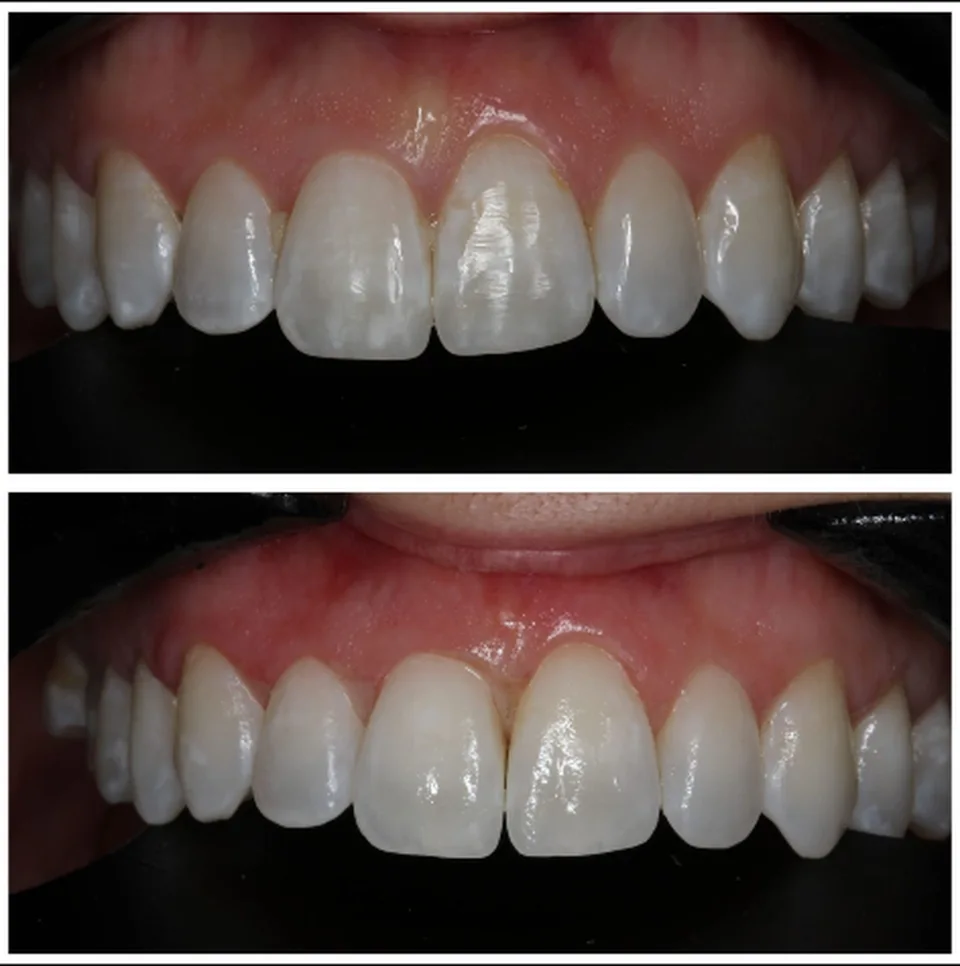
Clinical photographs should be viewed as examples rather than a guarantee of treatment outcome. The result of ICON treatment depends on the cause, depth, severity and characteristics of the individual enamel defect.
Is ICON better than veneers for white spots?
ICON and veneers are very different treatments.
For suitable white spots, resin infiltration may allow the natural tooth structure to be preserved without the conventional preparation required for veneers.
Veneers involve placing a restoration over the front surface of the tooth and may be appropriate for certain more extensive aesthetic problems.
The appropriate treatment depends on the individual patient's teeth, the severity of the enamel defect and their overall aesthetic goals.
Where a minimally invasive treatment can achieve an acceptable result, preserving natural tooth structure is an important consideration. Does teeth whitening remove white spots?
Teeth whitening does not necessarily remove white spots.
Whitening can make the overall tooth colour lighter, but the white areas themselves may remain visible. In some situations, increasing the surrounding tooth whiteness can even make the contrast between the white spot and the rest of the tooth more noticeable.
For this reason, a dentist may recommend a combination of treatments in selected cases.
For example, the published JIDA case involving Dr Fahad Khan used tooth whitening followed by resin infiltration to manage moderate fluorosis.
How long does ICON treatment take?
The treatment time depends on the number of teeth being treated and the severity of the white spots.
Many suitable cases can be treated in a relatively short appointment, although more extensive cases may require additional time or appointments.
During your consultation, your dentist can explain:
• How many teeth need treatment • Whether ICON is suitable • Whether whitening should be considered • The expected degree of improvement • Whether another treatment would be more appropriate
How successful is ICON for white spots?
Research suggests that resin infiltration can provide meaningful aesthetic improvement in suitable white spot lesions and can also be used to mask certain cases of fluorosis. A systematic review and meta-analysis found greater optical improvement following resin infiltration compared with untreated lesions and fluoride varnish, although the authors noted that the available evidence was still limited and that longer-term research is needed.
The result is not necessarily complete removal of every white mark.
Some lesions may become significantly less noticeable rather than disappearing completely.
This is particularly important when discussing treatment expectations with patients.
Is ICON suitable for everyone?
No.
Before treatment, your dentist needs to determine why the white spots are present and whether the enamel is suitable for resin infiltration.
ICON may be considered for certain:
• White spot lesions • Post-orthodontic white spots • Mild to moderate fluorosis • Enamel hypomineralisation • Other suitable non-cavitated enamel defects More extensive defects, cavities, significant enamel breakdown or certain developmental abnormalities may require alternative treatment.
White spots on teeth: frequently asked questions
What is the most common cause of white spots on teeth?
There is no single cause. White spots can result from enamel demineralisation, previous orthodontic treatment, fluorosis and developmental enamel defects. A dental examination is required to determine the likely cause.
Can white spots on teeth go away naturally?
Some early enamel demineralisation can improve with good oral hygiene, fluoride exposure and dietary changes. However, established enamel opacities or developmental defects may remain visible.
Can you permanently remove white spots from teeth?
Treatment can significantly reduce the visibility of suitable white spots, but the result depends on their cause and depth. Resin infiltration works by changing the optical appearance of porous enamel rather than simply painting over the lesion.
Does ICON damage your teeth?
ICON is designed as a minimally invasive treatment. It does not require conventional drilling or tooth preparation for veneers. The enamel is conditioned to allow the infiltrating resin to penetrate the lesion.
Can ICON treat fluorosis?
Yes, selected mild to moderate fluorosis cases may be treated with resin infiltration. Dr Fahad Khan co-authored a peer-reviewed JIDA case report specifically describing the management of moderate fluorosis using whitening and ICON resin infiltration.
Can ICON treat white spots after braces?
Yes. Resin infiltration is an established minimally invasive approach for suitable post-orthodontic white spot lesions and has demonstrated aesthetic improvement in clinical studies.
Treating white spots on teeth at Maypark Dental, Dublin
If you are concerned about white spots, fluorosis or enamel discolouration, the first step is to establish what is causing them.
At Maypark Dental in Dublin, we can assess the appearance and condition of your teeth and discuss minimally invasive treatment options where appropriate.
For suitable patients, ICON resin infiltration may provide a way to significantly reduce the appearance of white spots while preserving the natural tooth structure.
If you have white spots on your front teeth and would like to know whether they are caused by fluorosis, previous braces or enamel demineralisation, book a consultation to discuss your options.
Perfect smiles begin here.
Want to get in touch? We’d love to hear from you.