
The Maypark Journal
Dental Implant Procedure Guide: Step-by-Step Process
If you're considering dental implants, you're not alone. Dental implants are a popular and effective solution for replacing missing teeth. This guide will walk you through the entire process, so you know what to expect at each stage. From initial consultation to the final placement, here's a step-by-step look at how you can get dental implants procedure. Here's how Dr. Fahad explains dental implants:

1. Initial Consultation
The journey begins with an initial consultation with a dentist or oral surgeon. During this visit, you'll discuss your dental history and any current oral health issues. The dentist will perform a thorough examination, which often includes X-rays or 3D scans, to assess the condition of your jawbone and surrounding teeth. This step is crucial for determining whether you are a good candidate for dental implants.
2. Treatment Planning
Once the initial consultation is complete, your dentist will create a personalized treatment plan. This plan takes into account your unique dental needs and goals. It will outline the type of implants suitable for you, the number of implants required, and any preparatory procedures that might be necessary, such as bone grafting if your jawbone isn’t thick enough to support an implant.
3. Preparatory Procedures
In some cases, additional procedures are needed before the implants can placed. These might include:
- Bone Grafting: If your jawbone is too thin or weak, a bone graft may needed to build up the bone. This process involves adding bone material to the existing jawbone to provide a stable base for the implant.
- Tooth Extraction: If the missing tooth is still in place and needs to be removed, this will done before implant placement.
- Sinus Lifts: For implants in the upper jaw, a sinus lift may be necessary to make space for the implant.
These procedures typically require a healing period before the implants can placed. Your dentist will guide you through this process and provide a timeline based on your individual needs.
4. Implant Placement
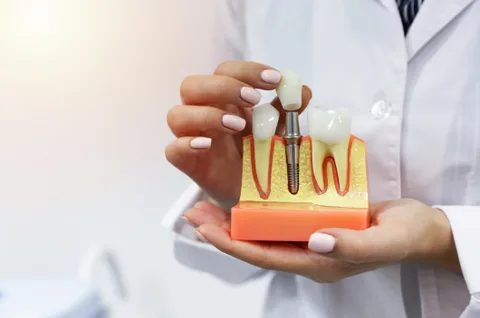
The next step is the actual placement of the dental implants. During this procedure, the dentist will surgically insert small titanium posts into the jawbone. However, these posts act as artificial tooth roots and will eventually support the replacement teeth. The surgery is usually performed under local anesthesia, and most patients report only minimal discomfort during and after the procedure.
5. Osseointegration
After the implants are placed, a process called osseointegration begins. This is where the titanium posts fuse with the surrounding bone. It can take several months for this process to complete, typically around 3 to 6 months. During this time, you may wear a temporary crown or bridge to maintain your appearance and function.
6. Abutment Placement
Once the osseointegration is complete, a second minor surgical procedure is performed to place the abutments. Abutments are small connectors that will hold the replacement teeth. During this procedure, the dentist will attach the abutments to the implants, which will protrude slightly above the gum line. This procedure is usually done under local anesthesia and is less invasive than the initial implant surgery.
7. Impressions and Customization
With the abutments in place, your dentist will take impressions of your mouth to create custom crowns or bridges. Moreover, these impressions used to fabricate the final restoration, which will designed to match the color, shape, and size of your natural teeth. The customization process ensures that your new teeth will blend seamlessly with your existing teeth and look natural.
8. Placement of Final Restorations
Once your custom crowns or bridges are ready, you’ll return to the dentist for the final placement. The dentist will carefully attach the crowns or bridges to the abutments, ensuring a proper fit and alignment. After placement, you may need a follow-up visit to make any necessary adjustments and ensure everything is functioning correctly.
9. Post-Procedure Care
After the final restorations are in place, proper care is essential to ensure the longevity and health of your dental implants. Your dentist will provide instructions on how to care for your new implants, including:
- Oral Hygiene: Brush and floss regularly to keep your implants and surrounding gums healthy.
- Diet: Avoid hard or sticky foods that could damage the implants or cause discomfort.
- Regular Check-Ups: Schedule regular dental visits to monitor the condition of your implants and overall oral health.
10. Ongoing Maintenance
Dental implants procedure designed to be a long-term solution, but they require ongoing care and maintenance. By following your dentist’s recommendations and maintaining good oral hygiene, you can ensure that your implants remain in excellent condition for years to come.
Conclusion
Getting dental implants involves several key steps, from the initial consultation to the final placement of your new teeth. While the process may seem complex, each stage is designed to ensure the best possible outcome and restore your smile with functionality and aesthetics. By understanding what to expect and working closely with your dental team, you can achieve a successful result and enjoy the benefits of a confident, complete smile.
Perfect smiles begin here.
Want to get in touch? We’d love to hear from you.